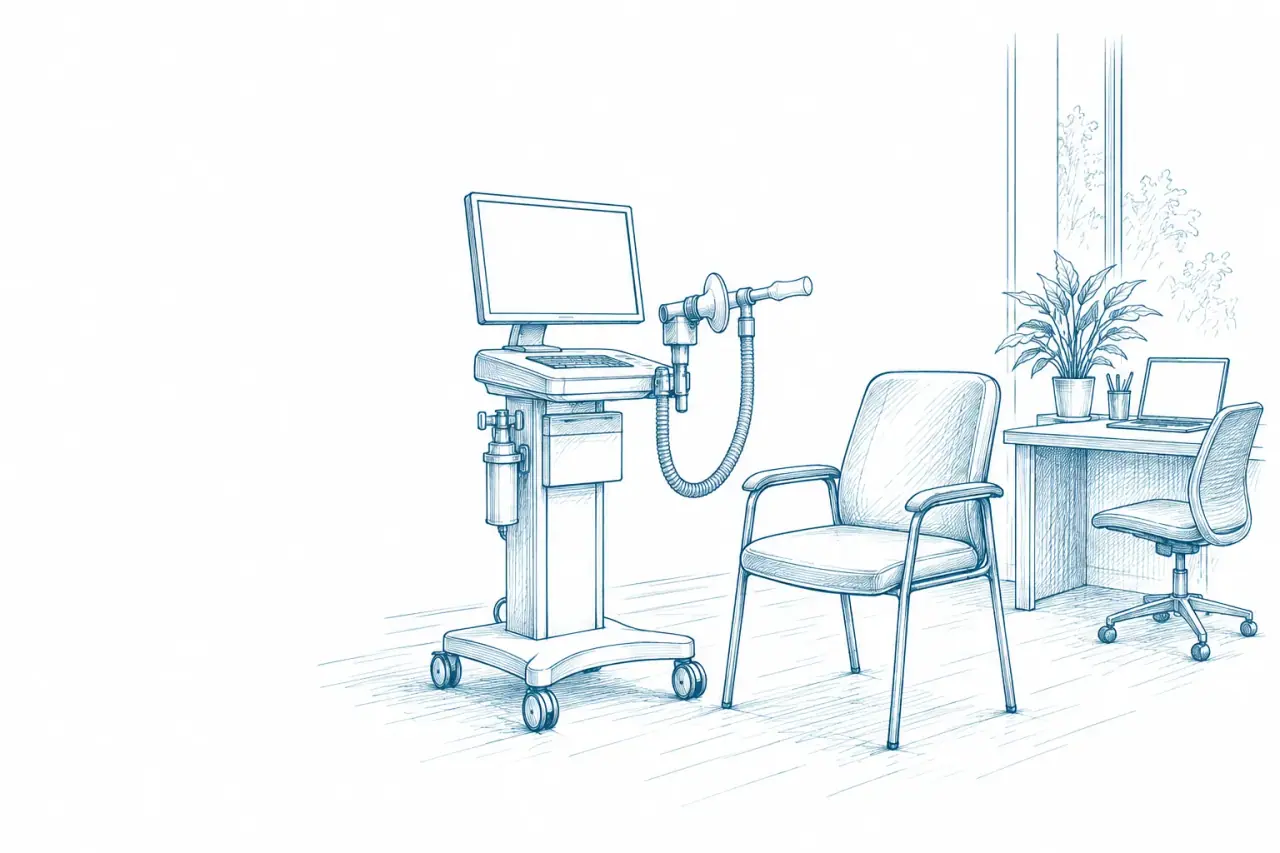
AI medical interpreter for pulmonology
Opalite interprets inhaler teaching, oxygen plans and action plans in 150+ languages and dialects, in real time.
Today's challenge
What gets in the way of interpretation in pulmonology today
A son relaying sleep study results
A son relays his father's sleep study results and leaves out the nightly CPAP rule.
Bronchoscopy recovery after the booking
Bronchoscopy recovery teaching happens hours after the scheduled interpreter's slot.
Spirometry stalled on hold
The spirometry technician waits on hold with the patient already seated at the machine.
Cost of inaction
Language interpretation remains a gap in pulmonology
4.3x the odds
of uncontrolled asthma applied to non-English speakers in a cohort of 28,346 patients with asthma.
Source: Impact of language barriers on pulmonary function and asthma control
Meet Opalite.
Real-time AI medical interpretation in 150+ languages and dialects, connecting providers and patients in seconds.
- Works on the devices care teams already carry: phones, tablets, computers, and telehealth platforms
- Integrates with all EHRs
- Built for HIPAA-compliant healthcare
- SOC 2 Type II attested security controls
Workflow
How Opalite fits pulmonary care before, during and after the visit
Pulmonologist visit
Results, diagnosis, inhaler changes, oxygen plan
Real-time two-way interpretation, with Guardian checking every sentence.
Respiratory therapy teaching
Inhaler and spacer technique, oxygen equipment
The same app on the therapist's phone or tablet, with no per-language surcharge
Pulmonary rehabilitation
Exercise sessions, breathing techniques, education
In person, or by video through Zoom, Microsoft Teams and more
Clinical use cases
Interpret the conversations that matter most
Controller versus rescue inhaler
EnglishUse your controller inhaler every day, even when you feel fine. Use the rescue inhaler only when breathless.
SpanishUse el inhalador de control todos los días, aunque se sienta bien. Use el de rescate solo cuando le falte el aire.
Inhaler technique
EnglishBreathe all the way out, then breathe in slowly through the spacer. Rinse your mouth afterward.
Chinese (Mandarin)先把气全部呼出来,再通过储雾罐慢慢吸气。用完后要漱口。
Oxygen flow and use
EnglishUse 2 liters per minute at rest and 4 liters per minute when you walk.
Arabicاستخدم 2 لتر في الدقيقة أثناء الراحة، و4 لترات في الدقيقة عند المشي.
Oxygen safety
EnglishNever smoke while using oxygen, and keep it away from stoves, candles and open flames.
SpanishNunca fume mientras use el oxígeno, y manténgalo lejos de estufas, velas y fuego.
Flare warning signs
EnglishIf you need your rescue inhaler more than usual, you are in the yellow zone. Call us.
Chinese (Mandarin)如果您比平时更常需要用急救吸入器,就是进入了黄色区。请给我们打电话。
Success metrics
How you'll know it's working
Inhaler technique checks. Share of patients with a documented technique check in their preferred language.
Action plans in the patient's language. Share of asthma and COPD patients given a translated, reviewed plan.
Pricing
Pricing for pulmonary practices
Rehab sessions at a flat rate. A flat rate scoped to your sites, departments or usage adds no per-minute cost to long pulmonary rehab classes and spacer teaching.
In your area
25.5 million people in the U.S. speak English less than “very well.”
How many live near you? Search your state, ZIP code, or town.
Darker states have a higher share of residents who speak English less than very well; shading is logarithmic, relative to the highest-share state.
| State | Share | People |
|---|---|---|
| California | 17.2% | 6,377,000 |
| Texas | 13.1% | 3,532,000 |
| New York | 13.1% | 2,486,000 |
| New Jersey | 12.2% | 1,060,000 |
| Florida | 11.8% | 2,389,000 |
| Hawaii | 11.2% | 152,900 |
| Nevada | 11.1% | 320,200 |
| Massachusetts | 9.5% | 631,900 |
| New Mexico | 8.7% | 172,700 |
| Illinois | 8.5% | 1,027,000 |
| Connecticut | 8.4% | 288,200 |
| Rhode Island | 8.4% | 87,250 |
| Arizona | 8.1% | 542,400 |
| Washington | 7.6% | 547,600 |
| Maryland | 7.1% | 411,700 |
| Virginia | 5.8% | 469,000 |
| Colorado | 5.5% | 295,600 |
| Georgia | 5.4% | 541,600 |
| District of Columbia | 5.4% | 34,600 |
| Oregon | 5.4% | 214,100 |
| Nebraska | 5.1% | 93,560 |
| Delaware | 4.9% | 45,460 |
| Utah | 4.7% | 140,000 |
| Kansas | 4.5% | 124,100 |
| Minnesota | 4.5% | 239,600 |
| North Carolina | 4.5% | 439,200 |
| Pennsylvania | 4.4% | 544,000 |
| Alaska | 4.3% | 29,650 |
| Oklahoma | 3.8% | 142,200 |
| Idaho | 3.7% | 62,850 |
| Iowa | 3.4% | 100,800 |
| Michigan | 3.4% | 318,900 |
| Arkansas | 3.2% | 90,380 |
| Indiana | 3.2% | 200,900 |
| Tennessee | 3.1% | 197,500 |
| Wisconsin | 3.0% | 164,200 |
| Louisiana | 2.8% | 123,500 |
| South Carolina | 2.8% | 132,700 |
| Ohio | 2.5% | 281,500 |
| Kentucky | 2.4% | 101,800 |
| New Hampshire | 2.4% | 31,410 |
| Missouri | 2.1% | 123,000 |
| Alabama | 2.1% | 98,720 |
| South Dakota | 1.9% | 15,800 |
| North Dakota | 1.9% | 13,810 |
| Wyoming | 1.8% | 9,923 |
| Mississippi | 1.6% | 44,870 |
| Maine | 1.4% | 18,140 |
| Vermont | 1.3% | 7,705 |
| Montana | 0.8% | 7,731 |
| West Virginia | 0.6% | 11,060 |
Source: U.S. Census Bureau ACS (states 2017-2021; metros 2024 or 2020-2024). Limited English: residents 5+ who speak English less than “very well.”
FAQ
Frequently asked questions
Explore
Where pulmonology is practiced
Related
See Opalite in pulmonology.
Try an interpreted inhaler-teaching session in the languages your patients speak.