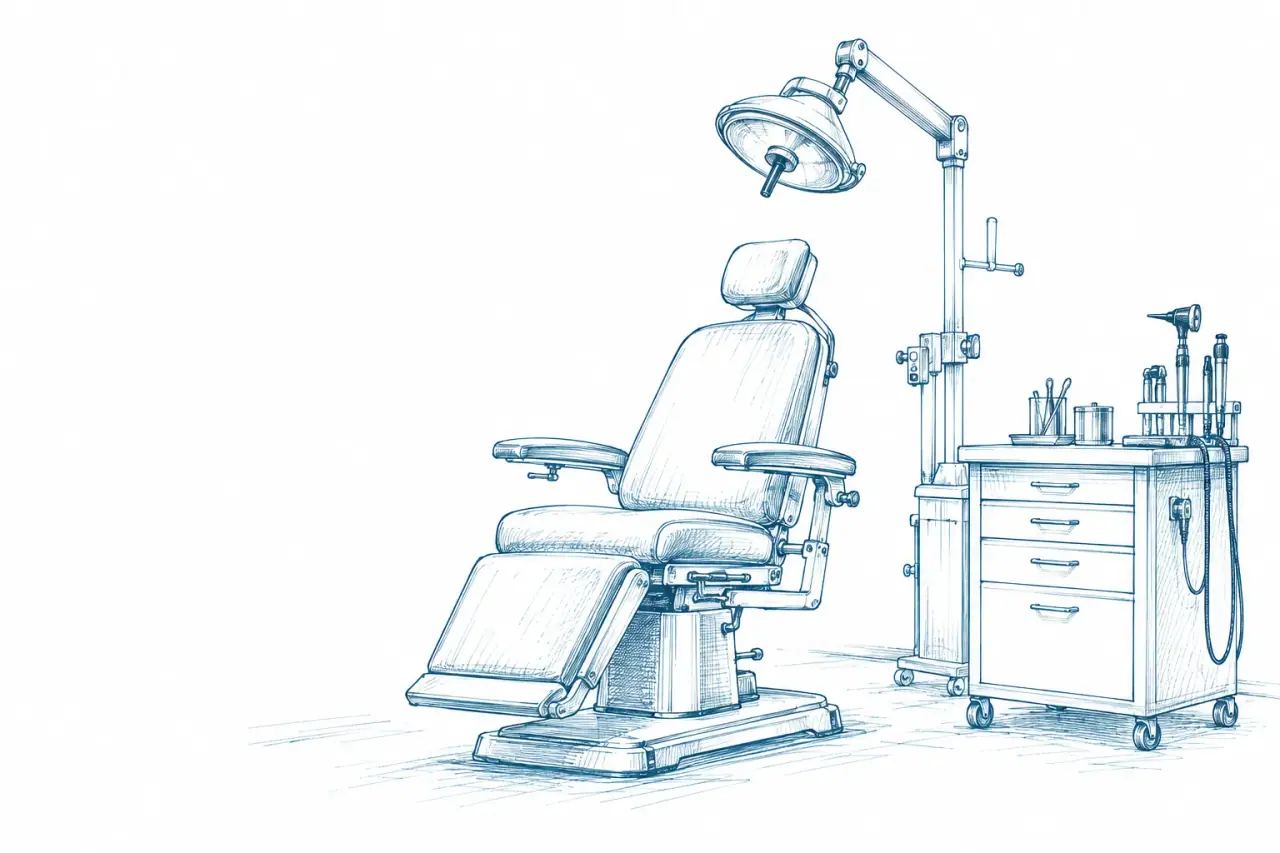
AI medical interpreter for otolaryngology (ENT)
Opalite gives ENT clinics, audiology and head and neck surgery teams real-time spoken interpretation in 150+ languages and dialects, from the hearing booth to post-op calls.
Today's challenge
What gets in the way of interpretation in otolaryngology today
Typing through the sinus history
The ENT surgeon types the sinus history into the chart instead of watching the patient point to the pain.
A grandchild relaying scope findings
In the ENT exam room, a grandchild relays laryngoscopy findings to a grandparent and turns "tumor" and "biopsy" into gentler words.
A skipped risk in thyroid consent
The patient signs a thyroid or sinus surgery consent with one risk missing from the interpretation.
Cost of inaction
Language interpretation remains a gap in otolaryngology
23.6% vs. 9.3%
of non-English and English speakers had moderate to profound hearing loss at one Los Angeles otolaryngology clinic.
Source: Effects of Language, Age, and Hearing Loss on Health-Related Quality of Life
25%
of clinicians skip speech testing for patients speaking neither English nor Spanish, per a survey cited in a 2026 review.
Source: Beyond speech perception: contemporary landscape of language agnostic hearing assessment
Meet Opalite.
Real-time AI medical interpretation in 150+ languages and dialects, connecting providers and patients in seconds.
- Works on the devices care teams already carry: phones, tablets, computers, and telehealth platforms
- Integrates with all EHRs
- Built for HIPAA-compliant healthcare
- SOC 2 Type II attested security controls
Workflow
How Opalite fits ENT care
| Stage | What happens | How Opalite supports it |
|---|---|---|
| Clinic and audiology | Ear, nose and throat history, scope findings, hearing test instructions | Two-way spoken interpretation on the exam-room tablet or phone, with no booking ahead of the booth slot |
| Surgery day | Tonsil, sinus, ear and thyroid surgery consent, recovery questions | Guardian checks each interpreted sentence about risks and post-op restrictions. |
| Post-op and implant follow-up | Bleeding calls, packing removal, cochlear implant mapping visits | Phone interpretation on any line, plus Zoom and Microsoft Teams for video follow-up. |
Clinical use cases
Interpret the conversations that matter most
Bleeding after tonsillectomy
EnglishIf you see bright red blood in your child's mouth, go to the emergency room right away.
SpanishSi ve sangre roja y brillante en la boca de su hijo, vaya a la sala de emergencias de inmediato.
Nose care after sinus surgery
EnglishDon't blow your nose for one week after surgery, and sneeze with your mouth open.
Chinese (Mandarin)手术后一周内不要擤鼻涕,打喷嚏时要张开嘴。
Instructions before the hearing test
EnglishRaise your hand every time you hear a beep, even a very soft one.
Arabicارفع يدك في كل مرة تسمع فيها صفيرًا، حتى لو كان خافتًا جدًا.
Describing vertigo
SpanishTodo me da vueltas cuando me volteo en la cama, y me zumba el oído izquierdo.
EnglishThe room spins when I roll over in bed, and my left ear rings.
Cochlear implant activation
EnglishWe will turn on your implant in a few weeks, and sounds may seem strange at first.
Chinese (Mandarin)几周后我们会开启您的植入装置,刚开始声音听起来可能会有点奇怪。
Pricing
Pricing for ENT practices
Long implant counseling, no meter. A flat rate scoped to your ENT service puts no per-minute meter on cochlear implant counseling or surgical consent.
In your area
25.5 million people in the U.S. speak English less than “very well.”
How many live near you? Search your state, ZIP code, or town.
Darker states have a higher share of residents who speak English less than very well; shading is logarithmic, relative to the highest-share state.
| State | Share | People |
|---|---|---|
| California | 17.2% | 6,377,000 |
| Texas | 13.1% | 3,532,000 |
| New York | 13.1% | 2,486,000 |
| New Jersey | 12.2% | 1,060,000 |
| Florida | 11.8% | 2,389,000 |
| Hawaii | 11.2% | 152,900 |
| Nevada | 11.1% | 320,200 |
| Massachusetts | 9.5% | 631,900 |
| New Mexico | 8.7% | 172,700 |
| Illinois | 8.5% | 1,027,000 |
| Connecticut | 8.4% | 288,200 |
| Rhode Island | 8.4% | 87,250 |
| Arizona | 8.1% | 542,400 |
| Washington | 7.6% | 547,600 |
| Maryland | 7.1% | 411,700 |
| Virginia | 5.8% | 469,000 |
| Colorado | 5.5% | 295,600 |
| Georgia | 5.4% | 541,600 |
| District of Columbia | 5.4% | 34,600 |
| Oregon | 5.4% | 214,100 |
| Nebraska | 5.1% | 93,560 |
| Delaware | 4.9% | 45,460 |
| Utah | 4.7% | 140,000 |
| Kansas | 4.5% | 124,100 |
| Minnesota | 4.5% | 239,600 |
| North Carolina | 4.5% | 439,200 |
| Pennsylvania | 4.4% | 544,000 |
| Alaska | 4.3% | 29,650 |
| Oklahoma | 3.8% | 142,200 |
| Idaho | 3.7% | 62,850 |
| Iowa | 3.4% | 100,800 |
| Michigan | 3.4% | 318,900 |
| Arkansas | 3.2% | 90,380 |
| Indiana | 3.2% | 200,900 |
| Tennessee | 3.1% | 197,500 |
| Wisconsin | 3.0% | 164,200 |
| Louisiana | 2.8% | 123,500 |
| South Carolina | 2.8% | 132,700 |
| Ohio | 2.5% | 281,500 |
| Kentucky | 2.4% | 101,800 |
| New Hampshire | 2.4% | 31,410 |
| Missouri | 2.1% | 123,000 |
| Alabama | 2.1% | 98,720 |
| South Dakota | 1.9% | 15,800 |
| North Dakota | 1.9% | 13,810 |
| Wyoming | 1.8% | 9,923 |
| Mississippi | 1.6% | 44,870 |
| Maine | 1.4% | 18,140 |
| Vermont | 1.3% | 7,705 |
| Montana | 0.8% | 7,731 |
| West Virginia | 0.6% | 11,060 |
Source: U.S. Census Bureau ACS (states 2017-2021; metros 2024 or 2020-2024). Limited English: residents 5+ who speak English less than “very well.”
FAQ
Frequently asked questions
Explore
Where otolaryngology (ent) is practiced
Related
See Opalite in otolaryngology.
Run a hearing test explanation or a tonsillectomy discharge call in your patients' languages.