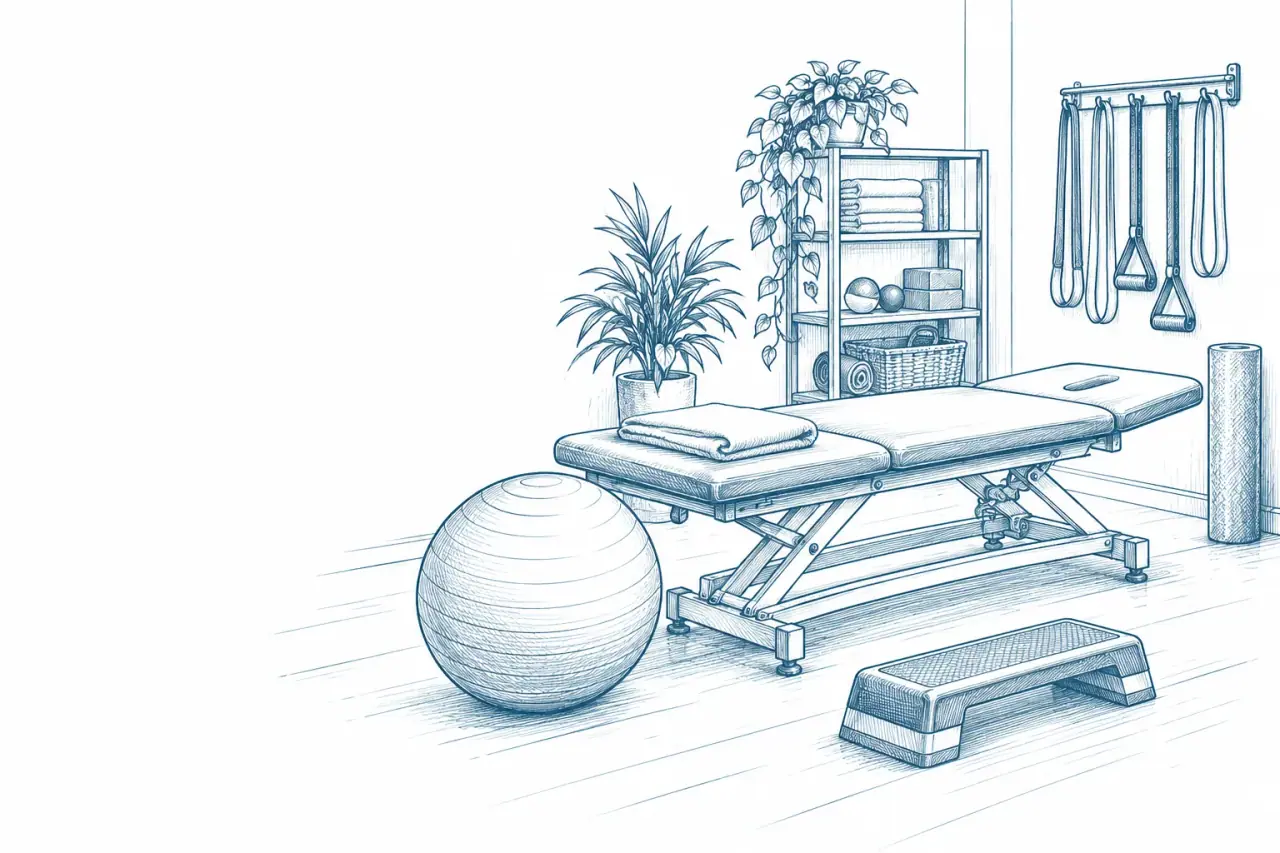
AI medical interpreter for rehabilitation medicine and therapy
Opalite gives physiatrists and physical, occupational and speech therapists real-time interpretation in 150+ languages and dialects for evaluations, goal setting and telerehabilitation visits.
Today's challenge
What gets in the way of interpretation in rehabilitation medicine today
Typing through the gait check
The physiatrist types the spasticity history instead of watching the patient walk.
Telerehab with a second line
Juggling a phone interpreter alongside a video therapy visit can leave the stretches coached in partly understood English.
Bengali for a Sylheti speaker
A Sylheti speaker in outpatient PT learns the home exercise plan through a Standard Bengali interpreter.
Cost of inaction
Language interpretation remains a gap in rehabilitation medicine
24 to 66 fewer minutes
of therapy is the projected loss for Medicare patients with LEP over a 5-day hospital stay with ICU care.
6.7 more days
Adults with LEP in inpatient rehab for moderate to severe brain injury spent longer in post-traumatic amnesia.
Meet Opalite.
Real-time AI medical interpretation in 150+ languages and dialects, connecting providers and patients in seconds.
- Works on the devices care teams already carry: phones, tablets, computers, and telehealth platforms
- Integrates with all EHRs
- Built for HIPAA-compliant healthcare
- SOC 2 Type II attested security controls
Workflow
How Opalite fits rehabilitation medicine
| Stage | What happens | How Opalite supports it |
|---|---|---|
| Physiatry and therapy evaluation | Functional baseline, prior language use and the patient's goals | Two-way interpretation on the therapist's phone or tablet, with no scheduling |
| Treatment sessions | PT, OT and speech therapy, cueing and pain checks | Guardian checks each interpreted sentence, including swallow and splint precautions |
| Team conference and telerehab follow-up | Progress updates, caregiver training and video visits | Video and phone interpretation, with clinician review of notes ahead of the EHR |
Clinical use cases
Interpret the conversations that matter most
The patient's own goal
EnglishWhat is one thing you want to be able to do again by the time you go home?
Spanish¿Qué es lo que más quiere volver a poder hacer para cuando regrese a casa?
Aphasia or a second language
EnglishBefore the stroke, which language did you use most at home, and could you read and write it?
Chinese (Mandarin)中风之前,您在家里最常说哪种语言?您会读写这种语言吗?
Swallow precautions
EnglishGive him only thickened liquids, and keep him sitting upright for 30 minutes after meals.
Arabicأعطه السوائل المكثفة فقط، وأبقِه جالسًا بشكل مستقيم لمدة 30 دقيقة بعد الأكل.
Splint wear and skin checks
EnglishTake the splint off every 2 hours and check the skin for red spots.
SpanishQuítese la férula cada 2 horas y revise la piel para ver si hay manchas rojas.
Describing pain and numbness
Chinese (Mandarin)您拉伸我胳膊的时候,会有烧灼感,然后一直麻到手指。
EnglishWhen you stretch my arm, it burns and then goes numb down to my fingers.
Pricing
Pricing for rehabilitation medicine services
Every session on one rate. A flat rate scoped to your rehabilitation service carries no per-minute meter for daily PT, OT and speech sessions, even with aphasia slowing every exchange.
In your area
25.5 million people in the U.S. speak English less than “very well.”
How many live near you? Search your state, ZIP code, or town.
Darker states have a higher share of residents who speak English less than very well; shading is logarithmic, relative to the highest-share state.
| State | Share | People |
|---|---|---|
| California | 17.2% | 6,377,000 |
| Texas | 13.1% | 3,532,000 |
| New York | 13.1% | 2,486,000 |
| New Jersey | 12.2% | 1,060,000 |
| Florida | 11.8% | 2,389,000 |
| Hawaii | 11.2% | 152,900 |
| Nevada | 11.1% | 320,200 |
| Massachusetts | 9.5% | 631,900 |
| New Mexico | 8.7% | 172,700 |
| Illinois | 8.5% | 1,027,000 |
| Connecticut | 8.4% | 288,200 |
| Rhode Island | 8.4% | 87,250 |
| Arizona | 8.1% | 542,400 |
| Washington | 7.6% | 547,600 |
| Maryland | 7.1% | 411,700 |
| Virginia | 5.8% | 469,000 |
| Colorado | 5.5% | 295,600 |
| Georgia | 5.4% | 541,600 |
| District of Columbia | 5.4% | 34,600 |
| Oregon | 5.4% | 214,100 |
| Nebraska | 5.1% | 93,560 |
| Delaware | 4.9% | 45,460 |
| Utah | 4.7% | 140,000 |
| Kansas | 4.5% | 124,100 |
| Minnesota | 4.5% | 239,600 |
| North Carolina | 4.5% | 439,200 |
| Pennsylvania | 4.4% | 544,000 |
| Alaska | 4.3% | 29,650 |
| Oklahoma | 3.8% | 142,200 |
| Idaho | 3.7% | 62,850 |
| Iowa | 3.4% | 100,800 |
| Michigan | 3.4% | 318,900 |
| Arkansas | 3.2% | 90,380 |
| Indiana | 3.2% | 200,900 |
| Tennessee | 3.1% | 197,500 |
| Wisconsin | 3.0% | 164,200 |
| Louisiana | 2.8% | 123,500 |
| South Carolina | 2.8% | 132,700 |
| Ohio | 2.5% | 281,500 |
| Kentucky | 2.4% | 101,800 |
| New Hampshire | 2.4% | 31,410 |
| Missouri | 2.1% | 123,000 |
| Alabama | 2.1% | 98,720 |
| South Dakota | 1.9% | 15,800 |
| North Dakota | 1.9% | 13,810 |
| Wyoming | 1.8% | 9,923 |
| Mississippi | 1.6% | 44,870 |
| Maine | 1.4% | 18,140 |
| Vermont | 1.3% | 7,705 |
| Montana | 0.8% | 7,731 |
| West Virginia | 0.6% | 11,060 |
Source: U.S. Census Bureau ACS (states 2017-2021; metros 2024 or 2020-2024). Limited English: residents 5+ who speak English less than “very well.”
FAQ
Frequently asked questions
Explore
Where rehabilitation medicine and therapy is practiced
Related
See Opalite in rehabilitation medicine and therapy.
Run a goal-setting evaluation or a swallow precautions teaching in your patients' languages.