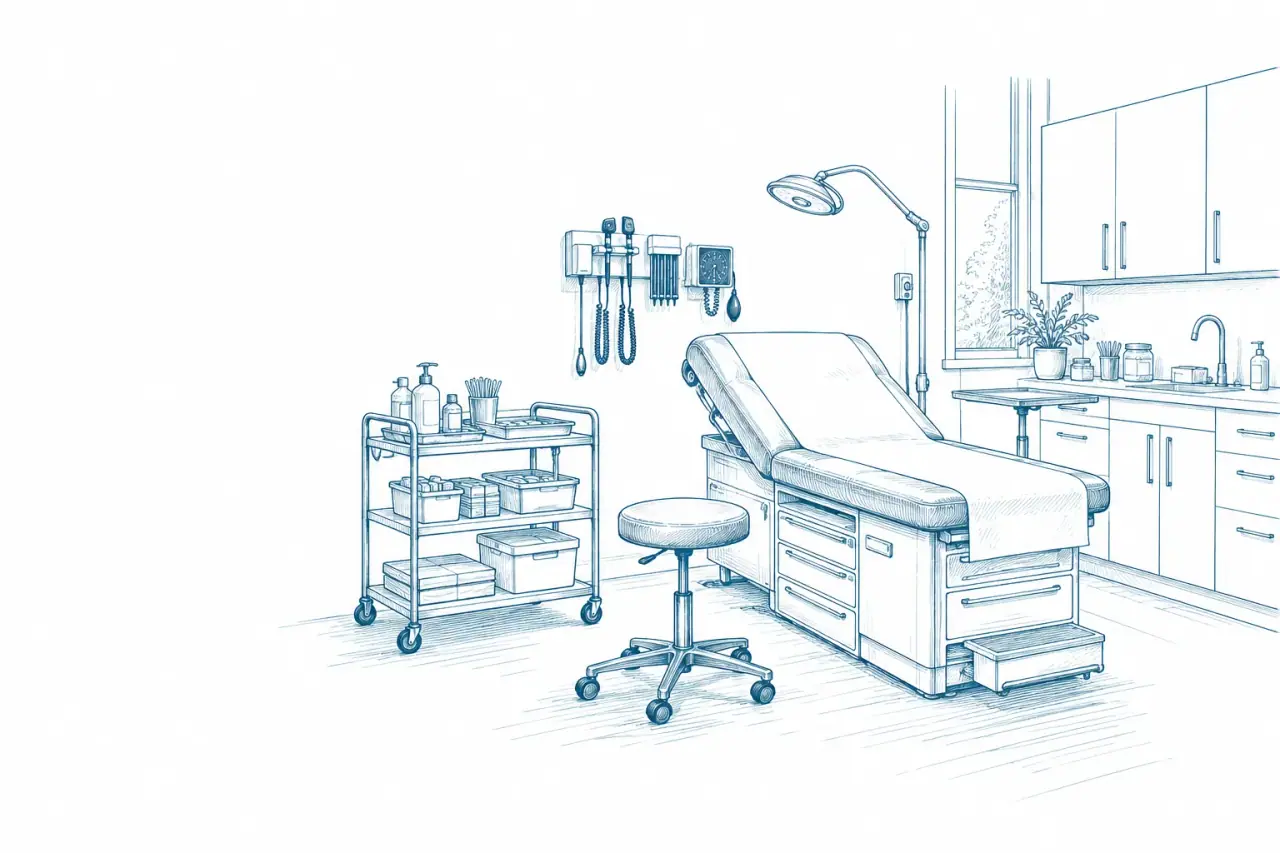
AI medical interpreter for urgent care
Opalite gives urgent care patients with limited English real-time interpretation in 150+ languages and dialects on evenings and weekends.
Today's challenge
What gets in the way of interpretation at urgent care centers today
Walk-ins can't be pre-booked
Nobody books an in-person interpreter for an 8 p.m. forehead laceration or a weekend ankle sprain.
Dari speakers wait at triage
A Dari or Farsi speaker at triage waits for a vendor match with the penicillin allergy and chest pain questions unanswered.
A son interprets a private result
A 14-year-old son relays his mother's questions about a positive pregnancy test.
Cost of inaction
Language interpretation remains a gap in urgent care
9% higher odds
Patients with limited English proficiency were admitted to the hospital more often at one academic emergency department, with 11% higher odds of X-ray or ultrasound.
Meet Opalite.
Real-time AI medical interpretation in 150+ languages and dialects, connecting providers and patients in seconds.
- Works on the devices care teams already carry: phones, tablets, computers, and telehealth platforms
- Integrates with all EHRs
- Built for HIPAA-compliant healthcare
- SOC 2 Type II attested security controls
Workflow
How Opalite fits the urgent care visit
Walk-in check-in
Reason for visit, insurance, forms
Phone, tablet or computer at the walk-in desk, plus document translation for intake forms
Triage
Vitals, allergies, symptom history
Two-way interpretation with no interpreter to book or wait for
Exam and treatment
Assessment, procedures, imaging
Guardian checks every sentence in real time
Clinical use cases
Interpret the conversations that matter most
Chief complaint at check-in
EnglishIs it a tightness or pressure in your chest, or a burning feeling after you eat?
Spanish¿Siente opresión o presión en el pecho, o es un ardor después de comer?
Allergies before the first dose
EnglishAre you allergic to any medicines, like penicillin, or to numbing shots at the dentist?
Chinese (Mandarin)您对什么药过敏吗?比如青霉素,或者看牙时打的麻药?
X-ray results and splints
EnglishYour ankle may be broken. Do not put weight on it; see orthopedics within one week.
Arabicقد يكون كاحلك مكسورًا. لا تضع وزنك عليه، وراجع طبيب العظام خلال أسبوع واحد.
"Go to the ER if…"
EnglishGo to the emergency room if she vomits again, gets very sleepy or has a bad headache.
SpanishVaya a la sala de emergencias si ella vuelve a vomitar, tiene mucho sueño o le da un dolor de cabeza fuerte.
Transfer to the emergency department
EnglishWe need to send you to the hospital emergency room now by ambulance, to check your heart.
Chinese (Mandarin)我们需要现在用救护车送您去医院急诊,检查一下您的心脏。
Success metrics
How you'll know it's working
Door-to-interpreter time for patients needing interpretation.
Interpreted share of visits, by shift and day of week.
Return-precaution teach-back documented on interpreted visits.
Pricing
Pricing for urgent care networks
Flu season doesn't change the bill. A winter walk-in surge never raises the flat rate scoped to your centers or overall usage.
In your area
25.5 million people in the U.S. speak English less than “very well.”
How many live near you? Search your state, ZIP code, or town.
Darker states have a higher share of residents who speak English less than very well; shading is logarithmic, relative to the highest-share state.
| State | Share | People |
|---|---|---|
| California | 17.2% | 6,377,000 |
| Texas | 13.1% | 3,532,000 |
| New York | 13.1% | 2,486,000 |
| New Jersey | 12.2% | 1,060,000 |
| Florida | 11.8% | 2,389,000 |
| Hawaii | 11.2% | 152,900 |
| Nevada | 11.1% | 320,200 |
| Massachusetts | 9.5% | 631,900 |
| New Mexico | 8.7% | 172,700 |
| Illinois | 8.5% | 1,027,000 |
| Connecticut | 8.4% | 288,200 |
| Rhode Island | 8.4% | 87,250 |
| Arizona | 8.1% | 542,400 |
| Washington | 7.6% | 547,600 |
| Maryland | 7.1% | 411,700 |
| Virginia | 5.8% | 469,000 |
| Colorado | 5.5% | 295,600 |
| Georgia | 5.4% | 541,600 |
| District of Columbia | 5.4% | 34,600 |
| Oregon | 5.4% | 214,100 |
| Nebraska | 5.1% | 93,560 |
| Delaware | 4.9% | 45,460 |
| Utah | 4.7% | 140,000 |
| Kansas | 4.5% | 124,100 |
| Minnesota | 4.5% | 239,600 |
| North Carolina | 4.5% | 439,200 |
| Pennsylvania | 4.4% | 544,000 |
| Alaska | 4.3% | 29,650 |
| Oklahoma | 3.8% | 142,200 |
| Idaho | 3.7% | 62,850 |
| Iowa | 3.4% | 100,800 |
| Michigan | 3.4% | 318,900 |
| Arkansas | 3.2% | 90,380 |
| Indiana | 3.2% | 200,900 |
| Tennessee | 3.1% | 197,500 |
| Wisconsin | 3.0% | 164,200 |
| Louisiana | 2.8% | 123,500 |
| South Carolina | 2.8% | 132,700 |
| Ohio | 2.5% | 281,500 |
| Kentucky | 2.4% | 101,800 |
| New Hampshire | 2.4% | 31,410 |
| Missouri | 2.1% | 123,000 |
| Alabama | 2.1% | 98,720 |
| South Dakota | 1.9% | 15,800 |
| North Dakota | 1.9% | 13,810 |
| Wyoming | 1.8% | 9,923 |
| Mississippi | 1.6% | 44,870 |
| Maine | 1.4% | 18,140 |
| Vermont | 1.3% | 7,705 |
| Montana | 0.8% | 7,731 |
| West Virginia | 0.6% | 11,060 |
Source: U.S. Census Bureau ACS (states 2017-2021; metros 2024 or 2020-2024). Limited English: residents 5+ who speak English less than “very well.”
FAQ
Frequently asked questions
Explore
Specialties in urgent care
Related
See Opalite at your urgent care center.
See a walk-in visit, from check-in to callback, in your community's languages.