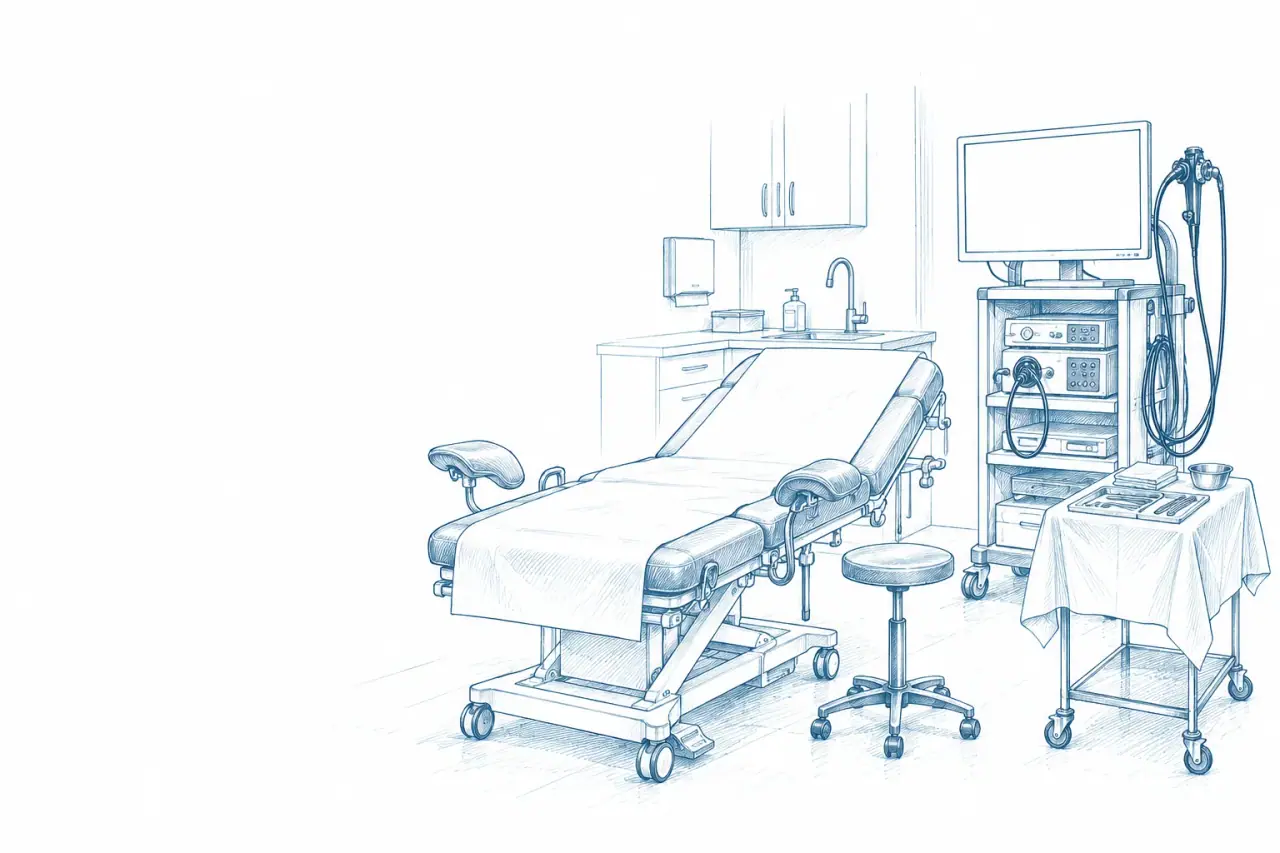
AI medical interpreter for colon and rectal surgery
Opalite gives colorectal surgery teams real-time spoken interpretation in 150+ languages and dialects, from the colectomy consent to ostomy teaching and post-op calls.
Today's challenge
What gets in the way of interpretation in colon and rectal surgery today
A daughter at the first pouch change
A grown daughter relays stoma care steps to her father and skips the details that embarrass them both.
A colostomy heard as temporary
A rectal cancer patient signs the resection consent without hearing the word "permanent" next to "colostomy."
Ostomy teaching past the booked slot
The ostomy nurse's hands-on teaching outlasts the in-person interpreter's reserved half hour on the surgical floor.
Cost of inaction
Language interpretation remains a gap in colon and rectal surgery
12.0%
of limited-English adults admitted for colectomy, appendectomy or gallbladder surgery at one urban academic center got discharge forms in their language.
Source: Use of Professional Interpreters for Patients With Limited English Proficiency Undergoing Surgery
33%
lower up-to-date colorectal cancer screening showed up among Hispanic adults with limited English and no chronic conditions versus non-Hispanic white adults in a national survey.
54%
of Asian American patients with colon, liver or lung cancer in one San Francisco Bay Area pilot named language assistance as a need.
Source: Patient-reported supportive care needs among Asian American cancer patients
Meet Opalite.
Real-time AI medical interpretation in 150+ languages and dialects, connecting providers and patients in seconds.
- Works on the devices care teams already carry: phones, tablets, computers, and telehealth platforms
- Integrates with all EHRs
- Built for HIPAA-compliant healthcare
- SOC 2 Type II attested security controls
Workflow
How Opalite fits colorectal surgical care
| Stage | What happens | How Opalite supports it |
|---|---|---|
| Clinic and consent | Bleeding and bowel history, cancer staging talk, stoma site marking, resection consent | Two-way spoken interpretation on the clinic tablet or phone, with no interpreter booking |
| Inpatient recovery and ostomy teaching | Pouch changes, diet steps, first walks, discharge teaching for patient and family | Bedside interpretation for surgeons and ostomy nurses, with Guardian checking each sentence |
| Home and follow-up | Ostomy output calls, pathology results, ileostomy reversal planning | Phone interpretation on any line, plus Zoom and Microsoft Teams for video follow-up |
Clinical use cases
Interpret the conversations that matter most
Checking the new stoma
EnglishYour stoma should look pink and moist. Call us if it turns dark purple or black.
SpanishSu estoma debe verse rosado y húmedo. Llámenos si se pone morado oscuro o negro.
Emptying the pouch
EnglishEmpty your pouch when it is one-third full, so it does not pull loose or leak.
Chinese (Mandarin)造口袋装到三分之一满时就要倒空,这样它不会松脱或漏出来。
High output from a new ileostomy
EnglishDrink extra fluids. Call us if your bag fills much faster than usual or you feel dizzy.
Arabicاشرب سوائل إضافية. اتصل بنا إذا كان الكيس يمتلئ أسرع بكثير من المعتاد أو شعرت بدوخة.
Waiting for bowel function
SpanishNo he expulsado gases desde la cirugía, y siento el estómago hinchado.
EnglishI have not passed gas since the surgery, and my belly feels swollen.
Sitz baths after anorectal surgery
EnglishSit in warm water for 15 minutes after each bowel movement to ease the pain.
Chinese (Mandarin)每次排便后,坐在温水里15分钟,可以减轻疼痛。
Pricing
Pricing for colorectal surgery practices
Long ostomy teaching, no meter. A flat rate scoped to your colorectal service puts no per-minute meter on pouch-change teaching or cancer surgery consent.
In your area
25.5 million people in the U.S. speak English less than “very well.”
How many live near you? Search your state, ZIP code, or town.
Darker states have a higher share of residents who speak English less than very well; shading is logarithmic, relative to the highest-share state.
| State | Share | People |
|---|---|---|
| California | 17.2% | 6,377,000 |
| Texas | 13.1% | 3,532,000 |
| New York | 13.1% | 2,486,000 |
| New Jersey | 12.2% | 1,060,000 |
| Florida | 11.8% | 2,389,000 |
| Hawaii | 11.2% | 152,900 |
| Nevada | 11.1% | 320,200 |
| Massachusetts | 9.5% | 631,900 |
| New Mexico | 8.7% | 172,700 |
| Illinois | 8.5% | 1,027,000 |
| Connecticut | 8.4% | 288,200 |
| Rhode Island | 8.4% | 87,250 |
| Arizona | 8.1% | 542,400 |
| Washington | 7.6% | 547,600 |
| Maryland | 7.1% | 411,700 |
| Virginia | 5.8% | 469,000 |
| Colorado | 5.5% | 295,600 |
| Georgia | 5.4% | 541,600 |
| District of Columbia | 5.4% | 34,600 |
| Oregon | 5.4% | 214,100 |
| Nebraska | 5.1% | 93,560 |
| Delaware | 4.9% | 45,460 |
| Utah | 4.7% | 140,000 |
| Kansas | 4.5% | 124,100 |
| Minnesota | 4.5% | 239,600 |
| North Carolina | 4.5% | 439,200 |
| Pennsylvania | 4.4% | 544,000 |
| Alaska | 4.3% | 29,650 |
| Oklahoma | 3.8% | 142,200 |
| Idaho | 3.7% | 62,850 |
| Iowa | 3.4% | 100,800 |
| Michigan | 3.4% | 318,900 |
| Arkansas | 3.2% | 90,380 |
| Indiana | 3.2% | 200,900 |
| Tennessee | 3.1% | 197,500 |
| Wisconsin | 3.0% | 164,200 |
| Louisiana | 2.8% | 123,500 |
| South Carolina | 2.8% | 132,700 |
| Ohio | 2.5% | 281,500 |
| Kentucky | 2.4% | 101,800 |
| New Hampshire | 2.4% | 31,410 |
| Missouri | 2.1% | 123,000 |
| Alabama | 2.1% | 98,720 |
| South Dakota | 1.9% | 15,800 |
| North Dakota | 1.9% | 13,810 |
| Wyoming | 1.8% | 9,923 |
| Mississippi | 1.6% | 44,870 |
| Maine | 1.4% | 18,140 |
| Vermont | 1.3% | 7,705 |
| Montana | 0.8% | 7,731 |
| West Virginia | 0.6% | 11,060 |
Source: U.S. Census Bureau ACS (states 2017-2021; metros 2024 or 2020-2024). Limited English: residents 5+ who speak English less than “very well.”
FAQ
Frequently asked questions
Explore
Where colon and rectal surgery is practiced
Related
See Opalite in colon and rectal surgery.
Run a colectomy consent or a first pouch change in your patients' languages.